

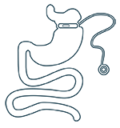
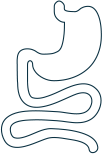





Sleeve Gastrectomy
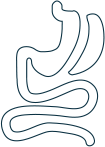
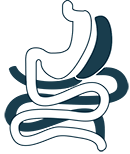
Sleeve gastrectomy is a restrictive bariatric surgery. During this procedure, the surgeon creates a small, sleeve-shaped stomach. It is larger than the stomach pouch created during Roux-en-Y bypass—and is about the size of a banana.
Unique to this procedure is a new hormonal effect. The hormone Ghrelin is mainly produced in the stomach and by removing the body of the stomach, we significantly decrease Ghrelin production. This hormone helps stimulate ones appetite therefore helping to reduce hunger. We are currently offering gastric sleeve surgeries as a primary procedure and also with the possibility of being performed as a single incision operation.
Co-morbid condition resolution 12 to 24 months after sleeve gastrectomy has been reported in 345 patients.24 Sleeve gastrectomy patients experienced resolution rates for type 2 diabetes, high blood pressure, high cholesterol, and obstructive sleep apnea that were similar to resolution rates for other restrictive procedures such as gastric banding.

Similar to other forms of gastroplasty, perioperative risk for sleeve gastrectomy appears to be relatively low, even in high risk patients. Published complication rates range from zero to 24% with an overall reported mortality rate of 0.39%. Only a single prospective randomized trial7 is published which compares sleeve gastrectomy to a more widely accepted bariatric procedure. In that trial, sleeve gastrectomy was found to be at least as effective and durable as adjustable gastric banding at one and three years following surgery.Long-term (> 5 yr) weight loss and comorbidity resolution data for sleeve gastrectomy have not been reported at this time.
Have a question about insurance, nutrition, or about a procedure?
Click here to ask>>